Education Equity and Universal Access
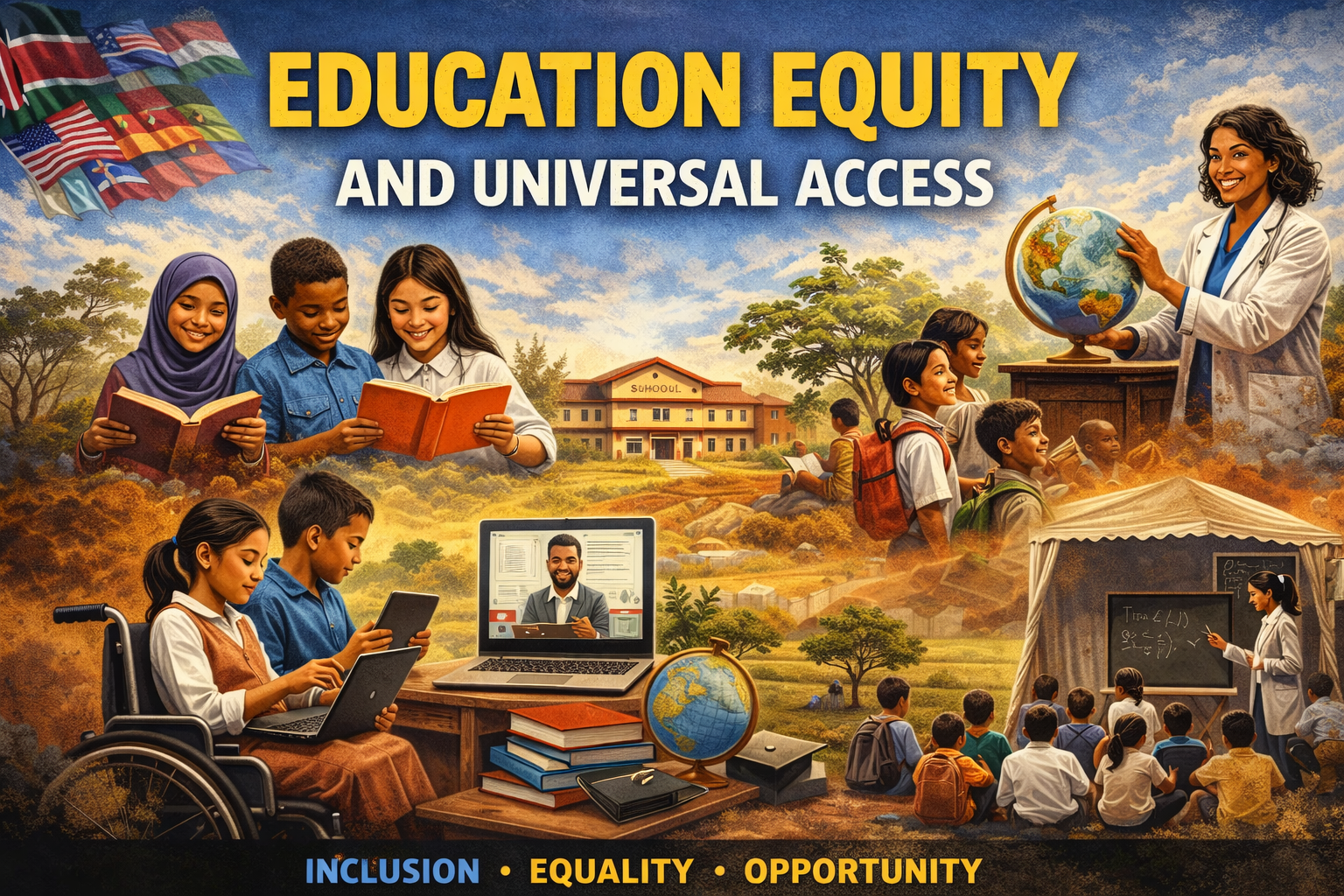
Education Equity and Universal Access
At independence, Kenya made bold and clear commitments: end hunger, eradicate poverty, and improve access to education. These aspirations were meant to lay the foundation for an equitable and prosperous society.
More than 60 years later, it is sobering that we are still grappling with the very same challenges.
Globally, the Sustainable Development Goals (SDGs) echo these priorities, poverty eradication and universal access to basic education by 2030. Locally, however, recent events remind us how far we still have to go. Reports indicate that over 800,000 students transitioning to Senior Secondary School did not report in the first week, largely due to challenges such as lack of school fees and related costs.
This reality reignites a critical conversation on the true cost of education.
Education is often described as the great equalizer and rightly so. It expands opportunities, improves living standards, and breaks intergenerational cycles of poverty. Yet, when access is determined by ability to pay, education risks becoming a privilege rather than a right.
Recently, public debate was sparked by the launch of a project by a Member of Parliament proposing that students in day secondary schools pay Ksh. 500 per term (approximately USD 5). Reactions have been mixed some supportive, others questioning, opposing, or indifferent. But beyond the debate lies a much bigger and more important question:
How do we guarantee universal access to basic education for every Kenyan child, without barriers?
There is no doubt that government has a central role to play in making education both accessible and affordable. While bursaries have been instrumental and remain important, they are not without challenges particularly around transparency, equity, and identification of deserving beneficiaries. In situations where two children are equally vulnerable, what determines who benefits and who is left out?
This points to the need for a more systemic and universal approach.
One possible solution is a fully subsidized basic education model covering primary, junior secondary, and senior secondary education. Another is the harmonization of existing bursary schemes, with structured identification of needy learners at the community and school levels.
Imagine the impact if MP, County (Governor), and National Government bursaries were consolidated into a single education subsidy framework simpler, fairer, and more predictable.
Perhaps the time has come to move beyond fragmented interventions and rethink how Kenya can truly achieve universal access to basic education not as an aspiration, but as a lived reality for every child.
The question is are we ready for this conversation?