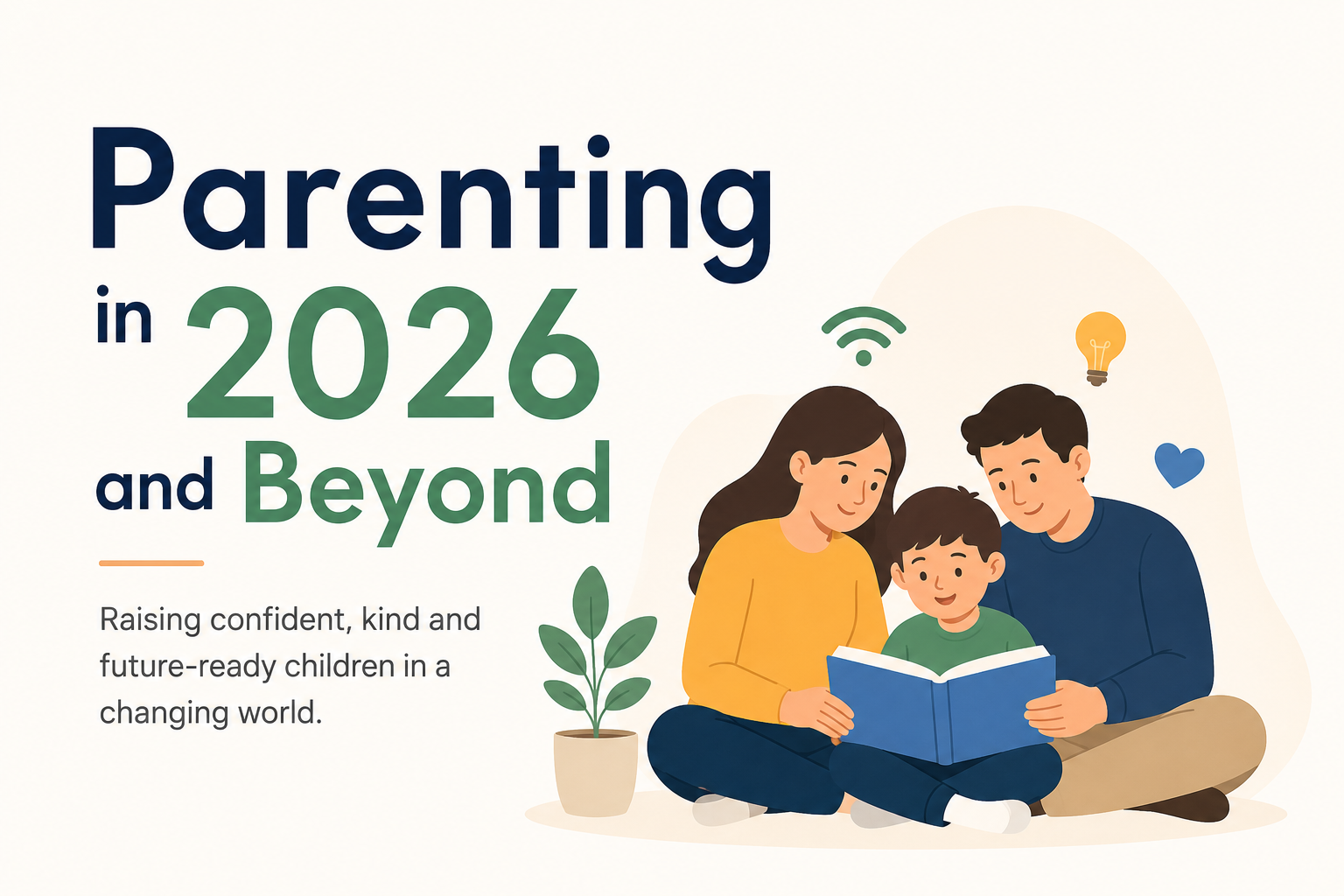
The Critical Balance: Parenting in 2026 and Beyond
The Critical Balance: Parenting in 2026 and Beyond
Parenting is often defined as the process of bringing up and caring for children. In reality, however, parenting is much more than that. It is one of the most influential responsibilities in society. Parenting can either nurture confidence, resilience and self belief, or contribute to fear, insecurity and uncertainty. It is often the foundation upon which a child’s future is built.
Over the past few months, Kenya has witnessed a number of incidents involving children and young people. From school unrest and cases of indiscipline to challenges within families and communities, these events have triggered intense public debate. Many people have been quick to point fingers at parents, questioning parenting styles, parental absence and approaches to discipline.
Like many others, I found myself reflecting on these conversations. Have parents really failed? Is there a universal parenting manual that everyone is expected to follow? If there is, where can one find it?
Looking at the issue through a community development lens raises important questions. Community development theory recognises that individuals do not exist in isolation. Families, schools, communities, institutions and social systems all contribute to shaping behaviour and outcomes. In this perspective, raising children is not solely the responsibility of parents. It is a collective investment that requires supportive relationships, strong institutions and enabling environments.
To understand parenting today, we must first understand how society has changed.
In traditional Kenyan communities, child upbringing was a collective responsibility. The roles of fathers, mothers, grandparents, aunts, uncles and older siblings were clearly defined. Every adult played a part in guiding, correcting and mentoring children. A child belonged not only to a family but also to the community. Values were passed from one generation to the next through daily interaction, storytelling, observation and shared experiences.
Following independence and especially with increasing urbanisation and modernisation, family structures began to change. People moved away from their extended families in search of education and employment opportunities. Economic pressures increased. Dual income households became more common. Career growth, personal development and financial stability became necessary pursuits rather than optional ambitions.
These changes have brought many positive outcomes. More women have joined the workforce. Families have greater access to education, healthcare and economic opportunities. However, they have also created new parenting challenges.
Today’s parents are often expected to do everything. They must provide financially, nurture emotionally, support academically and prepare their children for a rapidly changing world. Many are balancing demanding jobs, long commutes, financial obligations and personal aspirations. Yet they are still expected to be fully present in their children’s lives.
Perhaps this is why assigning blame alone does not solve the problem.
The reality is that many current parents are navigating parenting without adequate guidance. Some grew up raising younger siblings because their parents were busy working. Others are trying to avoid repeating difficult experiences from their own childhoods. Many are learning as they go.
We must remember that before someone becomes a parent, they are first a person. They have dreams, ambitions, strengths and limitations. Parenting does not erase these realities. Instead, it adds another profound responsibility: shaping another human being.
I often smile when I hear children confidently declare, “When I grow up, I want to be a doctor, teacher, pilot or police officer.” Such aspirations rarely emerge in isolation. Children dream based on what they see around them. They are inspired by family members, teachers, neighbours and other role models within their communities. This is why healthy communities are essential for raising confident and responsible children.
This raises an important question. How do we balance personal success and self development with meaningful parenting? How do we pursue careers, businesses and personal goals while remaining actively involved in our children’s lives?
The answer may not be found in choosing one over the other but in being intentional. Quality parenting is not always about the number of hours spent together. It is about the quality of those interactions. A conversation during dinner, attending a school event, listening without judgement, setting clear boundaries and creating safe spaces for children to express themselves can have a lasting impact.
Parents must also adapt to the realities of today’s world. Digital technology, social media, changing social norms and increased exposure to information require a different approach to parenting. Monitoring, guidance and open communication are becoming just as important as provision and discipline.
At the same time, parents cannot carry this responsibility alone. Communities, faith based organisations, civil society groups and government institutions must also contribute. Child development is a shared responsibility. When families struggle, society feels the consequences. When children thrive, society benefits.
As we reflect on the challenges facing children today, let us move away from blame and towards solutions. Let us ask what support parents need, what environments children are growing up in and how we can collectively strengthen families.
After all, the future of our nation is being shaped in homes, schools and communities every day. The children belong to all of us, and so does the responsibility of raising them well.