
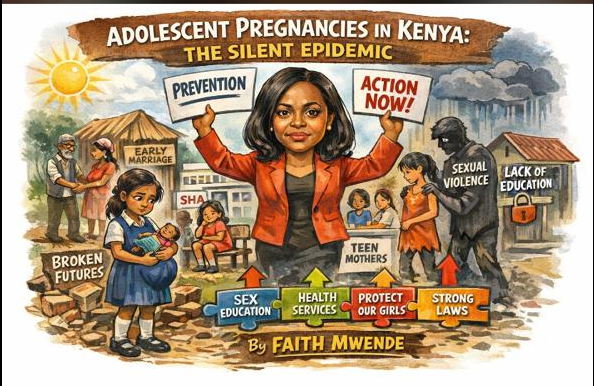
Adolescent and teen Pregnancies: The silent Epidemic
Adolescent and teen Pregnancies: The silent Epidemic
During a recent official visit to health facilities, I flipped through the Antenatal Clinic registers expecting routine entries. Instead, the ages of expectant mothers made my heart sink: 15, 14, 13, and one entry that disturbed me most, a 9 year old. Yes, a child who is about to become a mother. Picture this: by age 10, she could be a mum while still in Primary school, possibly alongside her own child. This is an interrupted childhood and sadly a story of broken dreams and aspirations.
In Kenya, adolescents aged 10 to 19 comprise around 22 percent of the population, representing the future of the nation. Yet adolescent pregnancies remain a critical societal challenge with profound public health, social and economic implications. According to the Kenya National Bureau of Statistics Kenya Demographic and Health Survey 2022, about 15 percent of girls aged 15 to 19 have ever been pregnant or given birth. Walking into an ANC waiting area, one can find pregnant girls playing while they wait, seated next to women old enough to be their mothers. It is a haunting image of a reality that is not isolated but widespread.
Health data confirm the persistence of adolescent pregnancies. In 2023, over 240,000 girls aged 10 to 19 attended ANC clinics. Yet this reflects only those who sought care. Many others may not have accessed services, and some face unsafe abortion risks. Between October 2024 and December 2025, the Social Health Authority recorded over 48,000 teenage mothers accessing services across 44 counties. This is more than a family problem. It is a national development concern, with disrupted education, health risks and limited economic prospects affecting a significant portion of our youth.
The drivers of early pregnancy are complex. At an individual level, 8 percent of girls report sexual activity before age 15. Stigma around discussing sexuality leaves adolescents without accurate information or guidance. At the family level, limited parent child communication, peer pressure and cross generational relationships increase vulnerability. Poverty, transactional relationships and harmful cultural practices such as child marriage and unequal power dynamics further weaken girls’ ability to make safe choices. Very young adolescents often intersect with sexual violence, highlighting that adolescent pregnancy is also a child protection and justice issue that requires effective enforcement of laws safeguarding children.
The consequences are severe. Adolescent mothers face higher risks of obstetric complications including hypertensive disorders and obstructed labor. Their infants are more likely to experience low birth weight or neonatal complications. Stigma and fear of judgment from health staff can also delay or prevent timely care. Education suffers as well. Despite Kenya’s school re entry policy for adolescent mothers, inconsistent implementation, childcare needs, financial constraints and stigma often push them out of school, reinforcing cycles of poverty.
Government efforts have introduced health cards and unique identifiers for teenage mothers, improving access to care and reducing financial barriers. While commendable, these are reactive measures that address consequences rather than prevention. Kenya must prioritize proactive and multisectoral solutions.
Root cause analysis is critical. Adolescents must be engaged in national dialogues to identify factors driving early pregnancies and to co create solutions based on their lived realities.
Sexuality education in schools and communities must be normalized, culturally sensitive and evidence based. It should focus on behavior change and life skills that empower young people to make informed decisions.
Adolescent friendly health services must be fully operational, offering confidential counselling, non-judgmental care, access to contraceptives and integration with HIV prevention services.
Family support. Parents should be equipped to have age appropriate conversations about sexuality, since open communication can delay sexual debut and encourage responsible choices.
Child protection laws must be enforced consistently to ensure perpetrators are held accountable and young adolescents are protected from sexual violence.
A coordinated multi sector response is essential. Clear accountability, defined roles and measurable actions must guide government and partner interventions.
Data systems strengthening. Information on all adolescent pregnancies should be available, not only those who present at health facilities. Access to social protection, health and justice services should be tracked across sectors to measure progress and ensure accountability.
Adolescent pregnancy in Kenya is not sudden or unpredictable. It is a silent epidemic that demands urgent and strategic response. Protecting adolescence is both a moral obligation and a strategic investment in our nation’s future. To harness Kenya’s demographic dividend, we must move beyond good intentions to measurable action. The next generation is watching and waiting for us to act.